
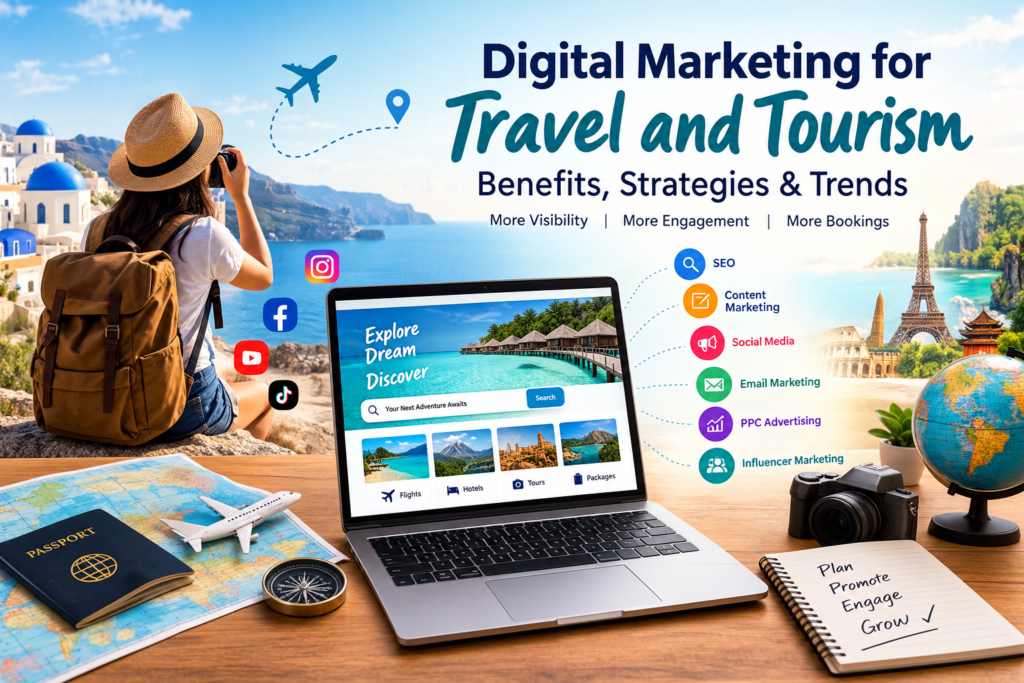
The way people plan and book their travel has changed significantly with the growth of digital technology. Today, travelers can discover destinations, compare hotels, read reviews, watch travel videos, check prices, and make bookings without visiting a traditional travel agency. A few searches on Google or a few minutes on social media can influence where a person travels, what they book, and which travel brand they choose.
This shift has made digital marketing for travel and tourism an important part of modern travel business strategies. Travel agencies, hotels, resorts, tour operators, airlines, homestays, and tourism organizations can use digital channels to reach potential travelers at different stages of their journey.
Digital marketing allows travel businesses to promote destinations, showcase experiences, communicate with customers, generate inquiries, increase website traffic, and encourage bookings. Unlike traditional marketing, digital marketing also provides businesses with data that can be used to understand customer behavior and improve campaigns.
In this guide, we will explore the benefits of digital marketing for travel and tourism, important digital marketing strategies, current trends, key performance indicators, common mistakes, and practical ways to create an effective digital marketing strategy for a travel business.
What Is Digital Marketing for Travel and Tourism?
Digital marketing for travel and tourism refers to the use of online platforms, digital technologies, and internet-based marketing channels to promote travel-related businesses, destinations, services, and experiences.
It involves reaching potential travelers through channels such as:
- Search engines
- Websites
- Social media platforms
- Online advertising
- Travel blogs
- Video platforms
- Online review platforms
- Google Business Profile
- Messaging platforms
For example, imagine someone searching for “best places to visit in Kerala” on Google. A travel company that has published a useful destination guide may appear in the search results. The traveler may then visit the company’s website, explore tour packages, read reviews, follow the brand on Instagram, and eventually make an inquiry or booking.
This entire process can be supported through digital marketing.
Travel businesses can use digital marketing to promote different types of offerings, including:
- Domestic tour packages
- International holidays
- Honeymoon packages
- Adventure tourism
- Luxury travel
- Budget travel
- Hotel and resort stays
- Flight bookings
- Car rentals
- Cruises
- Business travel
- Family vacations
- Destination experiences
The main objective is not simply to generate online visibility. A successful digital marketing strategy should help move potential customers from awareness and discovery to research, consideration, booking, and eventually loyalty.
Traditional Marketing vs. Digital Marketing in Travel
Traditional travel marketing may include newspapers, magazines, television advertisements, brochures, billboards, and offline events.
Digital marketing, on the other hand, allows businesses to communicate with customers through online channels and measure many aspects of campaign performance.
For example, a travel business can use Google Ads to target people searching for specific travel services, Instagram to showcase destinations visually, SEO to attract organic search traffic, and email marketing to stay connected with previous customers.
The two approaches can work together, but digital channels have become particularly valuable because travelers increasingly research and interact with businesses online.
Why Is Digital Marketing Important for Travel and Tourism?
Travel is highly visual, research-driven, and experience-oriented. Before making a booking, travelers often want to know where they will go, what they can do, how much it may cost, what other customers experienced, and whether the company is trustworthy.
Digital marketing can help travel businesses provide this information at the right time.
Travelers Start Their Journey Online
The travel decision-making process often begins long before the actual booking.
A person might see a destination video on social media, search for more information on Google, read a blog post, compare different hotels, check reviews, and then contact a travel company.
This creates multiple opportunities for businesses to reach potential customers.
For example:
Social media → Google search → Travel website → Reviews → Inquiry → Booking
A travel brand with a strong digital presence can potentially appear at several points throughout this journey.
Reach Travelers at Different Stages of Their Journey
Not every person searching for travel information is ready to book immediately.
One user might be looking for inspiration, while another may already be comparing prices.
Digital marketing allows businesses to create different types of content for different stages.
Dreaming Stage
The traveler is looking for inspiration.
Useful content can include:
- Destination videos
- Travel photographs
- “Best places to visit” articles
- Bucket-list destinations
- Travel inspiration posts
Planning Stage
The traveler is gathering practical information.
Useful content includes:
- Destination guides
- Itineraries
- Travel costs
- Visa information
- Transportation guides
- Best time to visit articles
Comparison Stage
The traveler begins evaluating different options.
Businesses can provide:
- Package comparisons
- Hotel information
- Customer reviews
- FAQs
- Detailed itineraries
- Pricing information
Booking Stage
The traveler is ready to take action.
At this stage, businesses need:
- Clear booking options
- Easy inquiry forms
- Transparent information
- Strong calls to action
- Secure payment options
- Quick customer support
Experience Stage
Digital marketing does not stop after the booking.
Businesses can communicate with customers through email, WhatsApp, mobile notifications, or other channels to provide travel information and assistance.
Loyalty Stage
After the trip, businesses can encourage customers to leave reviews, share experiences, return for another trip, or recommend the brand to others.
Benefits of Digital Marketing for Travel and Tourism
A well-planned digital marketing strategy can provide several benefits to travel businesses.
1. Increased Online Visibility
One of the biggest advantages of digital marketing is the ability to increase a travel brand’s visibility online.
Travelers frequently use search engines and social platforms to discover destinations and travel services. SEO, social media marketing, content marketing, and paid advertising can help businesses appear in front of relevant audiences.
For example, a travel agency targeting Mumbai customers could create content around searches such as:
- Best international tour packages from Mumbai
- Best weekend trips from Mumbai
- Family tour packages from Mumbai
- Honeymoon destinations from Mumbai
Creating useful content around relevant search queries can help a business reach people who are actively looking for travel information.
2. Reach a Wider Target Audience
Traditional marketing may be limited by geography, publication reach, or advertising placement.
Digital marketing allows travel companies to target audiences based on factors such as:
- Location
- Interests
- Search behavior
- Demographics
- Website interactions
- Previous engagement
For example, an international tour operator can promote a European holiday package to people in selected cities who have shown an interest in international travel.
This allows businesses to create more targeted campaigns instead of communicating with everyone using the same message.
3. More Website Traffic
A well-optimized website can become an important source of travel leads and bookings.
SEO can bring visitors through organic search, while social media, email marketing, paid advertising, and content marketing can generate additional traffic.
Travel websites can attract visitors with content such as:
- Destination guides
- Travel itineraries
- Hotel pages
- Tour packages
- Travel tips
- Comparison guides
- FAQs
The important point is that website traffic should be relevant. Thousands of visitors who have no interest in the business may be less useful than a smaller number of highly relevant potential travelers.
4. Generate More Leads and Bookings
The ultimate goal of many travel marketing campaigns is to generate inquiries, reservations, or direct bookings.
Digital channels can guide users toward actions such as:
- Requesting a quote
- Calling the travel agency
- Sending a WhatsApp message
- Filling out an inquiry form
- Booking a hotel
- Purchasing a tour package
- Subscribing to a newsletter
A clear website structure and strong calls to action can make it easier for visitors to take the next step.
5. Better Customer Engagement
Travel is an experience-based industry, making customer engagement particularly important.
Social media allows travel businesses to interact with potential and existing customers through:
- Comments
- Direct messages
- Stories
- Polls
- Questions
- Videos
- Live sessions
Businesses can also use email and messaging platforms to communicate important travel information and promotional updates.
Regular engagement can help keep a travel brand visible between purchases.
6. Personalized Marketing Experiences
Travel preferences vary considerably from one customer to another.
One person may be interested in luxury holidays, while another may prefer budget backpacking. A family may want child-friendly destinations, whereas a couple may be interested in honeymoon packages.
Digital marketing allows businesses to segment audiences and create more relevant campaigns.
For example, an agency could create separate campaigns for:
- Family holidays
- Solo travel
- Honeymoon packages
- Adventure travel
- Luxury travel
- Budget travel
- Corporate travel
Personalization can make marketing communication more relevant to the audience receiving it.
7. Cost-Effective Marketing
Digital marketing provides businesses with multiple channels and budget options.
A small travel business may start with organic SEO, social media content, email marketing, and local SEO before investing heavily in paid advertising.
Paid campaigns can also be adjusted based on budget and performance.
Instead of treating marketing as a fixed expense, businesses can monitor metrics such as traffic, leads, conversions, and advertising costs to understand how campaigns are performing.
8. Measurable Marketing Performance
Another major benefit of digital marketing is measurement.
Travel businesses can monitor metrics such as:
- Website traffic
- Organic traffic
- Keyword rankings
- Leads
- Booking conversions
- Cost per lead
- Advertising spend
- Social engagement
- Email performance
- Return on advertising spend
This information can help businesses identify which channels are generating results and where improvements may be required.
9. Stronger Brand Awareness
Consistent digital marketing can help travel businesses build recognition.
A brand that regularly publishes useful travel content, responds to customers, maintains active social media profiles, and appears in relevant search results can establish a stronger online presence.
Brand awareness is especially important in travel because customers are often choosing between multiple businesses offering similar services.
10. Improved Customer Loyalty
Digital marketing can continue after a customer completes a trip.
A business can stay connected through:
- Travel newsletters
- Personalized offers
- Loyalty programs
- Post-trip communication
- Destination recommendations
- Special promotions
- Customer communities
Encouraging customers to share reviews and experiences can also support future marketing efforts.
Top Digital Marketing Strategies for Travel and Tourism
There is no single digital marketing channel that works for every travel business. A successful strategy usually combines multiple channels based on the business model, target audience, destination, budget, and marketing goals.
Here are some of the most important strategies.
1. Search Engine Optimization (SEO)
SEO is one of the most valuable long-term strategies for travel businesses.
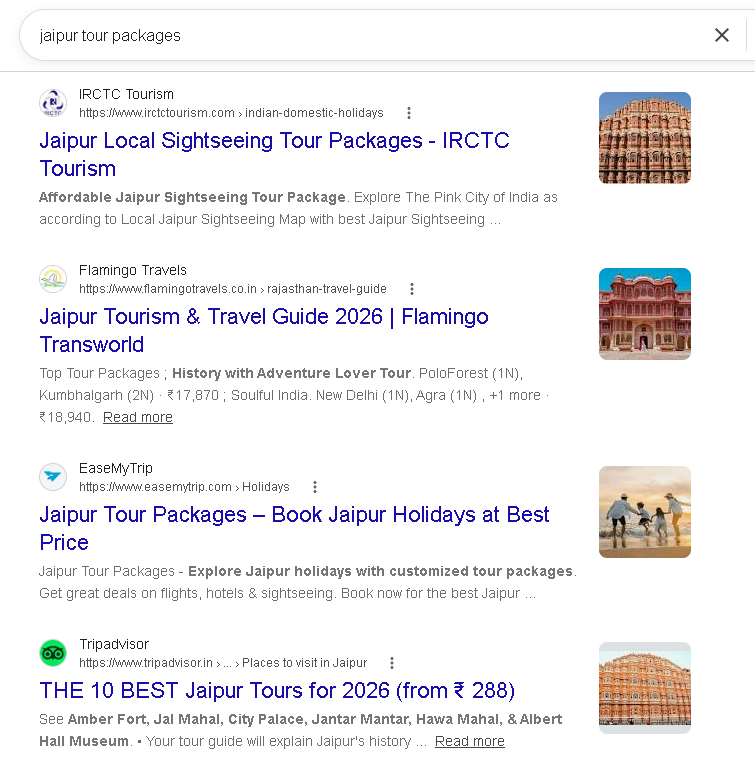
Travelers use search engines for almost every stage of trip planning. They may search for destinations, attractions, hotels, restaurants, travel packages, itineraries, transportation, and travel tips.
SEO helps a travel website improve its visibility for relevant search queries.
Important Travel SEO Activities
Keyword Research
Keyword research helps identify the terms potential customers use when searching for travel information.
Examples include:
- Best places to visit in Rajasthan
- Goa tour packages
- Best hotels in Jaipur
- Things to do in Bali
- Weekend trips from Mumbai
- Best honeymoon destinations in India
Travel businesses should consider both broad and specific keywords.
Informational keywords can attract users at the research stage, while commercial and transactional keywords can target users who are closer to making a booking.
On-Page SEO
Travel websites should optimize important elements such as:
- Page titles
- Meta descriptions
- Headings
- URLs
- Image alt text
- Internal links
- Content
- Calls to action
Each important page should clearly communicate what it offers to both users and search engines.
Technical SEO
Technical performance also matters.
Travel websites should pay attention to:
- Website speed
- Mobile usability
- Crawlability
- Indexing
- Broken links
- Site structure
- Secure HTTPS connections
- Core technical performance
A technically sound website provides a stronger foundation for SEO.
Travel Content
Content marketing and SEO work particularly well together.
A travel business can publish articles such as:
- Best places to visit in India
- Best time to visit Kerala
- Complete Goa travel guide
- 7-day Rajasthan itinerary
- Best things to do in Dubai
- Budget travel tips for Europe
Useful content can attract visitors who are researching their next trip.
2. Content Marketing
Travel is naturally suited to content marketing because travelers need information before making decisions.
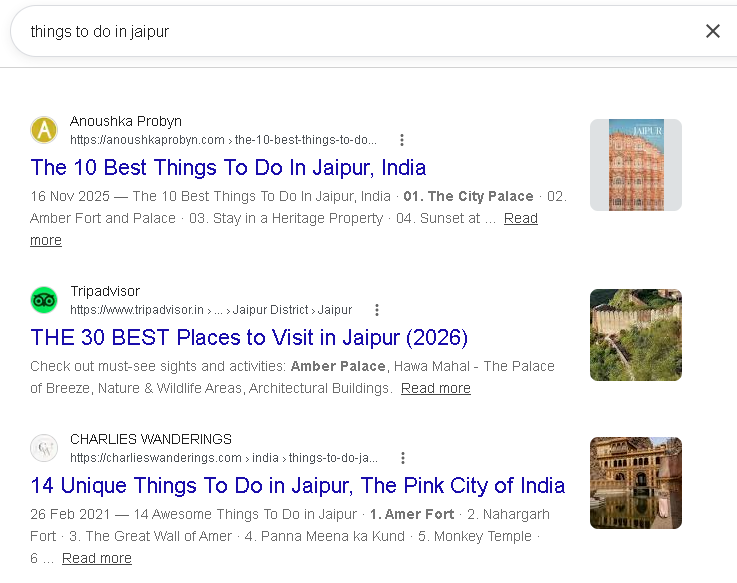
A travel business can use content to answer questions, inspire potential customers, demonstrate expertise, and showcase experiences.
Types of Travel Content
Travel Guides
Detailed destination guides can cover:
- Places to visit
- Things to do
- Transportation
- Accommodation
- Food
- Estimated budgets
- Travel tips
Itineraries
Ready-to-use itineraries can help travelers understand how they could structure their trip.
For example:
“7-Day Kerala Travel Itinerary”
could include destinations, activities, accommodation suggestions, and transportation information.
Travel Tips
Short practical articles can answer common questions.
Examples:
- What to pack for a beach vacation
- How to plan a budget trip
- Tips for first-time international travelers
- How to choose a travel package
Destination Content
Businesses can create content around specific destinations and experiences.
High-quality destination content can also provide opportunities to target long-tail SEO keywords.
3. Social Media Marketing
Social media has become an important channel for travel discovery because travel experiences are highly visual.
Platforms such as Instagram, Facebook, YouTube, and other video-focused platforms can help businesses showcase destinations, properties, activities, and customer experiences.
Travel Social Media Content Ideas
- Destination reels
- Hotel room tours
- Travel tips
- Local experiences
- Customer testimonials
- Behind-the-scenes content
- Destination photography
- Travel itineraries
- Packing tips
- Seasonal travel recommendations
For example, a hotel could create a short video showing its rooms, restaurant, swimming pool, nearby attractions, and guest experiences.
The goal should not always be direct selling. Informative and inspirational content can help audiences discover the brand and understand its offerings.
4. Pay-Per-Click (PPC) Advertising
PPC advertising allows travel businesses to promote their services through paid digital campaigns.
Search advertising can be useful for users who are already searching for specific travel products or services.
For example, a travel agency could create campaigns targeting searches related to:
- International holiday packages
- Dubai tour packages
- Maldives honeymoon packages
- Europe holiday packages
Social media advertising can also be used to reach audiences based on selected targeting criteria.
Benefits of PPC for Travel Businesses
- Faster visibility
- Targeted traffic
- Destination-specific campaigns
- Seasonal promotions
- Remarketing opportunities
- Measurable campaign performance
PPC can complement SEO by providing visibility while organic search strategies are being developed.
5. Email Marketing
Email marketing can help travel businesses maintain relationships with existing and potential customers.
A travel company can build an email list through website forms, booking processes, newsletters, and other legitimate opt-in methods.
Travel Email Ideas
- Monthly travel newsletters
- New destination announcements
- Seasonal travel offers
- Personalized recommendations
- Travel guides
- Upcoming holiday packages
- Post-trip communication
- Loyalty offers
For example, someone who previously booked a family holiday may be interested in future family-friendly destinations.
Relevant segmentation can make email communication more useful than sending the same message to every subscriber.
6. Local SEO for Travel Businesses
Local SEO is particularly important for businesses serving customers in specific geographical areas.
Travel agencies with physical offices can optimize their local online presence through:
- Google Business Profile
- Location-specific website pages
- Local keywords
- Customer reviews
- Accurate business information
- Local citations
For example, a travel agency serving Mumbai could target searches such as:
“travel agency in Mumbai”
or
“travel agency near me.”
A complete and accurate Google Business Profile can also help potential customers find business information such as location, contact details, operating hours, website, and reviews.
7. Influencer Marketing
Travel and tourism are well suited to influencer and creator marketing because creators can visually demonstrate destinations and experiences.
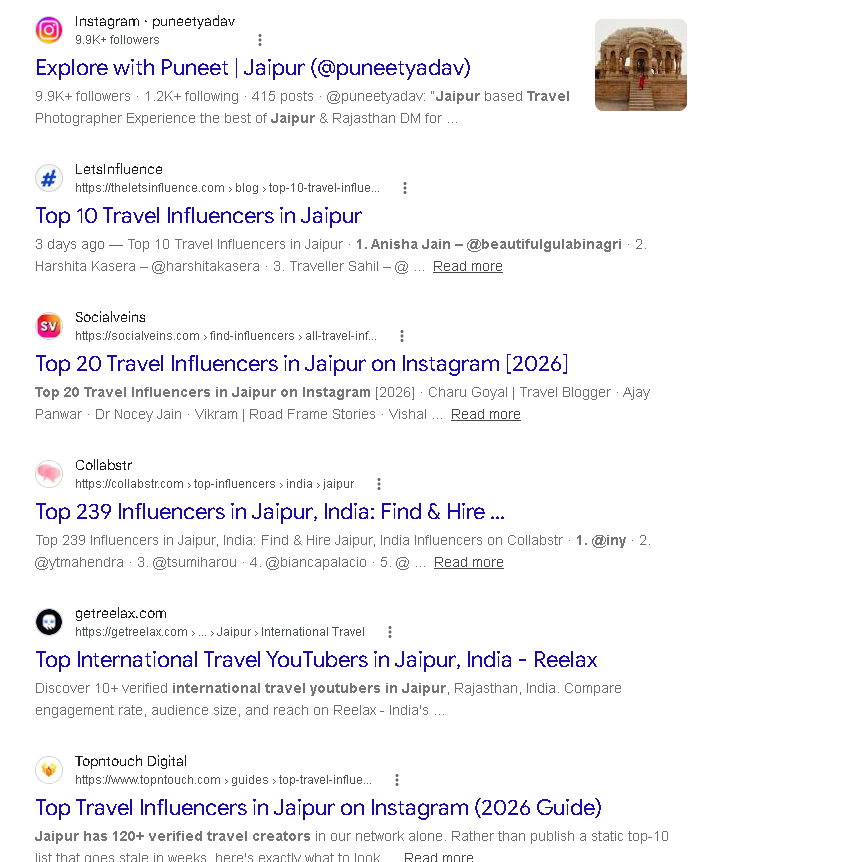
Travel businesses may collaborate with:
- Travel creators
- Destination influencers
- Lifestyle creators
- Micro-influencers
- Local content creators
A hotel, for example, might collaborate with a relevant creator to document a stay and showcase the property and surrounding destination.
How to Choose a Travel Influencer
Businesses should consider:
- Audience relevance
- Content quality
- Engagement
- Geographic relevance
- Audience demographics
- Brand alignment
- Transparency about sponsored content
Follower count alone does not necessarily indicate whether a creator is suitable for a particular campaign.
8. Online Reviews and Reputation Management
Reviews play an important role in the travel decision-making process.
Potential customers may look at reviews before choosing:
- Hotels
- Resorts
- Travel agencies
- Tour operators
- Restaurants
- Attractions
Travel businesses should encourage genuine customers to share honest feedback.
They should also monitor reviews and respond professionally to both positive and negative feedback.
A thoughtful response to criticism can demonstrate that the business takes customer concerns seriously.
Businesses should avoid fake or misleading reviews because authenticity is important for long-term trust.
9. Video Marketing
Video is particularly effective for showcasing travel experiences.
A destination can be difficult to communicate through text alone. Video can demonstrate landscapes, activities, accommodation, local culture, food, and experiences in a more immersive format.
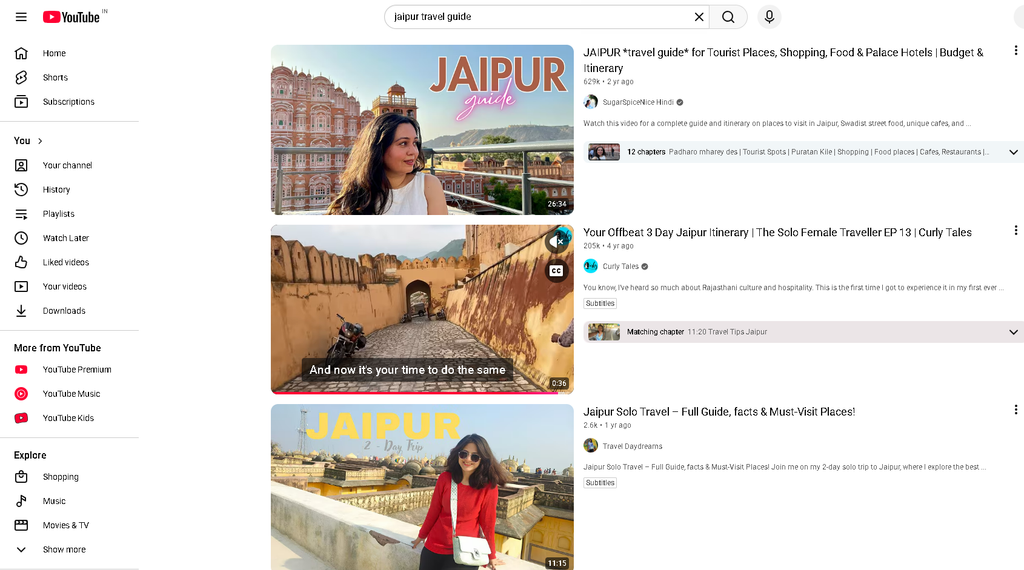
Travel businesses can create:
- YouTube travel guides
- Short-form videos
- Hotel tours
- Destination videos
- Customer testimonial videos
- Travel tips
- Behind-the-scenes videos
- Itinerary videos
A well-produced video can also be reused across multiple digital channels.
10. Mobile Marketing
Many travelers use smartphones throughout the travel planning and booking process.
Therefore, travel businesses should provide a strong mobile experience.
Important elements include:
- Mobile-friendly website design
- Fast-loading pages
- Easy navigation
- Simple inquiry forms
- Mobile-friendly booking
- Click-to-call options
- WhatsApp communication
- Mobile advertising
- Easy access to travel information
If a potential customer struggles to navigate a website on a smartphone, they may leave before completing an inquiry or booking.
Digital Marketing for Travel and Tourism: Strategies, Benefits & Best Practices
Digital Marketing Funnel for the Travel Industry
A traveler’s decision-making process usually involves several stages. Unlike some purchases that happen quickly, travel decisions can involve extensive research and comparison.
A digital marketing funnel helps travel businesses understand how to communicate with potential customers at different stages of their journey.
The typical travel marketing funnel can be represented as:
Awareness → Research → Consideration → Booking → Experience → Loyalty
Let’s understand each stage.
1. Awareness
At the awareness stage, a potential traveler may not yet have decided where to travel or which company to use.
The objective at this stage is to introduce the destination or brand to the audience.
Useful marketing channels include:
- Social media
- Travel blogs
- YouTube videos
- Search engine content
- Influencer collaborations
- Display advertising
For example, a tourism brand could publish a video titled “10 Beautiful Places to Visit in India” to introduce potential travelers to different destinations.
2. Research
Once travelers become interested in a destination, they usually start researching it.
They may search for:
- Best time to visit
- Places to visit
- Things to do
- Hotels
- Restaurants
- Transportation
- Travel costs
- Local attractions
At this stage, informative content becomes particularly important.
Travel businesses can create destination guides, itineraries, FAQs, comparison articles, videos, and travel tips.
3. Consideration
At the consideration stage, travelers may compare different hotels, tour operators, destinations, or packages.
Businesses can support this stage by providing:
- Detailed itineraries
- Transparent pricing
- Customer reviews
- High-quality photographs
- FAQs
- Service details
- Cancellation policies
- Testimonials
The easier it is for customers to understand what they are getting, the easier it becomes for them to evaluate their options.
4. Booking
At the booking stage, the traveler is ready to take action.
The website should make the process as simple as possible.
Important elements can include:
- Clear calls to action
- Easy inquiry forms
- Simple booking processes
- Multiple payment options
- Clear pricing
- Contact information
- Secure checkout
- Mobile-friendly design
A complicated booking process can create unnecessary friction.
5. Experience
Digital marketing does not stop once a customer makes a booking.
Businesses can use digital communication to support customers before and during their trip.
For example, they can send:
- Booking confirmations
- Travel reminders
- Check-in information
- Destination recommendations
- Contact information
- Important travel updates
Providing useful information can improve the overall customer experience.
6. Loyalty
After the trip, businesses can continue communicating with customers.
Post-trip communication could include:
- Thank-you emails
- Feedback requests
- Review requests
- Loyalty offers
- New destination recommendations
- Personalized travel suggestions
Satisfied customers may also become repeat customers or recommend the business to others.
Best Practices for Digital Marketing in Travel and Tourism
Creating digital campaigns is only one part of a successful marketing strategy. Travel businesses should also focus on providing useful information and a smooth customer experience.
1. Create a Mobile-Friendly Website
Travelers frequently use smartphones to research destinations, check hotel information, view maps, communicate with businesses, and make bookings.
A travel website should therefore work properly across smartphones, tablets, and desktops.
Important considerations include:
- Responsive design
- Easy navigation
- Fast-loading pages
- Readable text
- Mobile-friendly forms
- Clear booking buttons
- Simple menus
A mobile visitor should be able to find important information without unnecessary scrolling or navigation.
2. Use High-Quality Visual Content
Travel is highly visual.
Potential customers want to see destinations, hotel rooms, landscapes, activities, food, attractions, and experiences before making decisions.
Businesses can use:
- Professional photographs
- Short videos
- Destination reels
- Virtual tours
- Hotel walkthroughs
- Customer-generated photographs
However, visual content should accurately represent the actual experience. Overly edited or misleading images can create unrealistic expectations and negatively affect customer trust.
3. Focus on Search Intent
Travel SEO should focus on what users actually want to accomplish with their searches.
For example, someone searching “best places to visit in Kerala” is likely looking for information, while someone searching “Kerala tour package price” may be closer to making a purchase.
Creating separate content for different search intents allows businesses to address users with more relevant information.
4. Personalize Marketing Campaigns
Travel preferences differ significantly between customers.
One person may be interested in adventure travel, while another may prefer luxury resorts or family vacations.
Where appropriate data and consent are available, businesses can personalize marketing based on:
- Previous bookings
- Destination interests
- Travel preferences
- Customer segments
- Website interactions
Personalization can make marketing communication more relevant.
5. Highlight Authentic Experiences
Modern travelers often look beyond basic accommodation and transportation. They may be interested in local food, culture, adventure, nature, history, and unique experiences.
Travel businesses can use storytelling to showcase these experiences.
Instead of simply saying:
“Book our Rajasthan package.”
a business could explain what travelers can experience during the journey, such as local cuisine, heritage sites, cultural experiences, markets, and regional traditions.
6. Make Booking Easy
Once a customer decides to book, the process should be straightforward.
Businesses should avoid unnecessary steps that could cause users to abandon the booking process.
Clear information about:
- Price
- Availability
- Inclusions
- Exclusions
- Cancellation
- Payment
- Contact details
can help customers make informed decisions.
7. Use Genuine Customer Reviews
Reviews can provide valuable social proof.
Businesses should encourage genuine customers to share their experiences and respond professionally to feedback.
Reviews can also help businesses identify recurring customer concerns and opportunities for service improvement.
8. Track Analytics and Conversions
Digital marketing should be data-driven.
Businesses can use analytics tools to understand:
- Where website visitors come from
- Which pages receive traffic
- Which campaigns generate leads
- Which pages contribute to conversions
- Where users leave the website
This information can help marketers continuously improve their campaigns.
Common Digital Marketing Mistakes Travel Businesses Should Avoid
Even businesses that invest in digital marketing can make mistakes that reduce the effectiveness of their campaigns.
1. Ignoring SEO
Publishing travel content without considering search intent, keyword relevance, technical SEO, or website structure can make it harder for users to discover the content organically.
SEO should be considered as part of the overall content strategy rather than added at the last moment.
2. Having a Slow or Outdated Website
A website that loads slowly or is difficult to navigate can create a poor user experience.
Travel websites should regularly review their:
- Page speed
- Mobile usability
- Navigation
- Booking forms
- Broken links
- Content accuracy
3. Publishing Generic Content
Generic travel content may provide little value when many competitors publish similar information.
Travel businesses should look for opportunities to provide original insights, practical information, local expertise, useful examples, and genuinely helpful recommendations.
4. Neglecting Mobile Users
A website that works well on desktop but poorly on mobile can lose potential customers.
Mobile usability should therefore be part of website design, SEO, and conversion optimization.
5. Using Fake Reviews
Fake reviews can damage customer trust and create reputation problems.
Businesses should focus on earning authentic reviews through good customer experiences.
6. Focusing Only on Promotional Content
If every social media post or blog article is simply asking customers to book, audiences may have less reason to engage with the content.
A balanced content strategy can include:
- Educational content
- Inspirational content
- Entertainment
- Customer stories
- Destination information
- Promotional offers
7. Not Tracking Marketing Performance
Without performance measurement, businesses may continue spending money on activities without understanding their actual contribution.
Campaign objectives and relevant KPIs should be defined before launching major marketing activities.
8. Ignoring Customer Feedback
Customer comments and reviews can provide valuable insights.
Repeated complaints about booking processes, communication, pricing, or service quality may indicate areas that require attention.
Key Digital Marketing Trends in Travel and Tourism
Technology continues to influence how people discover and plan travel. Tourism businesses need to monitor changing customer behavior and digital technologies while avoiding the temptation to adopt every trend without a clear business purpose.
1. AI-Powered Personalization
Artificial intelligence can support personalization by helping businesses analyze customer interactions and deliver more relevant content or recommendations.
For example, travel platforms may use data and AI systems to recommend destinations, activities, or accommodation based on a user’s preferences and behavior.
Businesses should use customer data responsibly and follow applicable privacy requirements.
2. Generative AI and Travel Content
Generative AI is increasingly being used to assist with content creation, customer communication, brainstorming, research workflows, and travel planning.
Travel marketers can use AI tools to assist with tasks such as:
- Content ideation
- Drafting
- Content personalization
- Customer service workflows
- Travel itinerary concepts
- Data analysis
However, AI-generated information should be reviewed for accuracy, particularly when content includes prices, opening hours, travel requirements, transportation information, or other details that can change.
Human review remains important for maintaining accuracy, originality, and brand quality.
3. Short-Form Video Marketing
Short videos have become an important format for travel discovery.
Businesses can use short-form video to demonstrate:
- Destinations
- Attractions
- Hotel rooms
- Activities
- Local food
- Travel tips
- Itinerary ideas
Strong travel videos generally combine attractive visuals with useful information.
4. Conversational Search
People increasingly use conversational queries when searching for information online.
Instead of searching only for short keywords, users may ask complete questions such as:
“What are the best places to visit near Mumbai for a two-day trip?”
Travel businesses can create content that directly answers natural-language questions.
FAQ sections, detailed guides, and clearly structured content can help address these informational needs.
5. Virtual Tours and Immersive Content
Virtual tours can allow potential customers to explore hotels, resorts, attractions, or other locations digitally before making a decision.
For accommodation businesses, virtual tours can showcase:
- Rooms
- Conference spaces
- Restaurants
- Pools
- Event areas
- Common spaces
This can provide potential customers with additional information beyond traditional photographs.
6. First-Party Customer Data
Travel businesses can build direct relationships with customers through their websites, email lists, loyalty programs, and other first-party interactions.
Responsible use of first-party data can support personalization and customer communication while reducing dependence on external platforms.
Businesses should ensure that data collection and marketing practices comply with applicable privacy laws and platform policies.
How to Create a Digital Marketing Plan for a Travel Business
A structured plan helps businesses connect marketing activities with measurable objectives.
Step 1: Define Business Objectives
Start by identifying what the business wants to achieve.
Possible objectives include:
- Increase website traffic
- Generate more inquiries
- Increase direct bookings
- Promote a new destination
- Increase hotel occupancy
- Build brand awareness
- Improve repeat bookings
Objectives should be specific enough to measure.
Step 2: Identify the Target Audience
Define who the business wants to reach.
Audience segments could include:
- Families
- Couples
- Solo travelers
- Business travelers
- Adventure travelers
- Luxury travelers
- Budget travelers
- International tourists
- Domestic travelers
Understanding the audience helps determine the appropriate content, platforms, messaging, and offers.
Step 3: Research Competitors
Competitor research can help businesses understand how other travel brands are positioning themselves online.
Marketers can review:
- Website structure
- SEO content
- Social media activity
- Advertising messages
- Reviews
- Destination pages
- Blog topics
- Booking processes
The goal is to identify opportunities to provide more useful and differentiated customer experiences.
Step 4: Conduct Keyword Research
Identify relevant keywords based on the products, services, destinations, and questions your audience searches for.
Group keywords according to search intent and create an appropriate content plan.
Step 5: Select Digital Marketing Channels
Not every business needs to invest equally in every channel.
A travel agency might prioritize:
- SEO
- Google Ads
- Social media
- Email marketing
- Local SEO
A hotel might place greater emphasis on:
- Local SEO
- Search advertising
- Social media
- Reviews
- Direct booking optimization
Channel selection should be based on business objectives and audience behavior.
Step 6: Create a Content Strategy
Develop a content calendar covering different stages of the customer journey.
Content could include:
- Blog articles
- Destination guides
- Videos
- Social media posts
- FAQs
- Email newsletters
- Customer stories
Consistency is important, but quality and relevance should remain the priority.
Step 7: Set an Advertising Budget
If using paid advertising, define a budget based on business objectives and expected customer acquisition costs.
Campaigns should be monitored regularly rather than launched without performance tracking.
Step 8: Launch and Monitor Campaigns
Once campaigns are live, track relevant performance metrics.
Look at both short-term engagement and meaningful business outcomes.
Step 9: Measure KPIs
Compare campaign results against the original objectives.
For example, if the goal is lead generation, focus on qualified leads and cost per lead rather than only impressions.
Step 10: Optimize Continuously
Digital marketing is not a one-time activity.
Businesses should test:
- Headlines
- Landing pages
- Ad copy
- Images
- Calls to action
- Content topics
- Audience segments
The results can then be used to improve future campaigns.
Important Digital Marketing KPIs for Travel Businesses
Key performance indicators, or KPIs, help travel businesses measure the effectiveness of their digital marketing activities.
Website Traffic
Website traffic shows how many users visit the website and can help identify which channels are bringing visitors.
Organic Search Rankings and Traffic
SEO performance can be evaluated through keyword visibility, organic traffic, and engagement with search-driven landing pages.
Leads and Inquiries
For travel agencies and tour operators, inquiries can be an important indicator of customer interest.
Booking Conversion Rate
The booking conversion rate measures the percentage of relevant visitors who complete a booking or desired conversion action.
Cost Per Lead
Cost per lead helps businesses understand how much they are spending to generate an inquiry.
Customer Acquisition Cost
Customer acquisition cost estimates the marketing and sales cost associated with acquiring customers.
Social Media Engagement
Engagement can include:
- Likes
- Comments
- Shares
- Saves
- Video views
- Profile visits
However, engagement should be considered alongside business outcomes.
Email Performance
Important email metrics can include:
- Open rate
- Click-through rate
- Conversion rate
- Unsubscribe rate
Return on Ad Spend
ROAS compares revenue attributed to advertising with advertising expenditure, where reliable revenue attribution is available.
Future of Digital Marketing for Travel and Tourism
The future of digital marketing in travel and tourism will continue to be influenced by technology, changing consumer expectations, and new digital platforms.
Travelers are likely to continue using digital tools throughout the journey, from discovering destinations to researching options, booking services, navigating trips, and sharing experiences.
Artificial intelligence, personalization, video content, conversational interfaces, automation, and first-party customer relationships are likely to remain important areas for travel marketers to monitor.
At the same time, the fundamentals of successful tourism marketing will remain important:
Useful information + authentic experiences + customer trust + easy booking + measurable marketing
Technology can support these fundamentals, but it should serve the customer’s needs rather than simply being adopted because it is new.
Frequently Asked Questions About Digital Marketing for Travel and Tourism
What is digital marketing for travel and tourism?
Digital marketing for travel and tourism is the use of online channels such as SEO, social media, content marketing, email, paid advertising, websites, and online reviews to promote travel businesses, destinations, services, and experiences.
Why is digital marketing important for the tourism industry?
Digital marketing helps tourism businesses reach travelers while they research destinations, compare options, and make booking decisions. It can also support brand awareness, customer engagement, lead generation, direct bookings, and measurable marketing campaigns.
What are the best digital marketing strategies for travel agencies?
Travel agencies can use a combination of SEO, content marketing, social media marketing, paid advertising, email marketing, local SEO, online reputation management, and influencer marketing. The appropriate combination depends on the agency’s audience, services, location, and business objectives.
How does SEO help travel and tourism businesses?
SEO can help travel businesses improve their visibility in search engines for relevant travel-related searches. Destination guides, service pages, local SEO, travel blogs, and helpful informational content can attract users who are researching destinations and travel services.
How can social media help tourism businesses attract travelers?
Social media allows tourism businesses to showcase destinations, experiences, hotels, activities, and customer stories through visual content. It can also provide opportunities for audience engagement, community building, influencer collaborations, and paid advertising.
What are the latest digital marketing trends in tourism?
Important areas to monitor include AI-assisted personalization, generative AI, short-form video, conversational search, virtual experiences, automation, and responsible use of first-party customer data.
Conclusion
Digital marketing for travel and tourism has become an important part of how travel businesses connect with modern travelers. From the first Google search to social media discovery, online reviews, website research, and final booking, digital channels can influence multiple stages of the traveler’s journey.
A successful strategy does not depend on one platform or marketing technique. Travel businesses can combine SEO, content marketing, social media, PPC advertising, email marketing, local SEO, influencer marketing, and reputation management according to their objectives and target audience.
The most effective approach is customer-focused. Businesses should provide useful information, communicate authentic experiences, make booking simple, respond to customer feedback, and continuously measure their marketing performance.
As technology continues to evolve, travel businesses will have new opportunities to personalize communication, create engaging content, automate processes, and improve customer experiences. However, the fundamentals of digital marketing remain consistent: understand your audience, create valuable content, build trust, make the customer journey easier, and use data to improve your strategy.
For travel agencies, hotels, tour operators, resorts, and tourism organizations, investing in a well-planned digital marketing strategy can help create a stronger online presence and establish meaningful connections with travelers throughout their journey.